Copilot Studio
 M365 Copilot
 Copilot Cowork
 Autopilots
 Governance
AJ's Disclosure: This post was generated by ChatGPT (GPT-4o) based on my prompt. From time to time, I may post an article generated by AI when it is fit for purpose. In this case, the goal is to educate the reader on key differences between two choices for concluding a Topic. I see this as a matter of function-over-form. My promise to you is that I will always be upfront with you anytime I post content generated by AI so that you – the reader – are in the know. Also note that this is "original content", by which I mean this content has not been copied from another website or print source.
In Copilot Studio, the distinction between ending a topic and ending a conversation is critical for managing user interactions effectively. Here's how they differ:
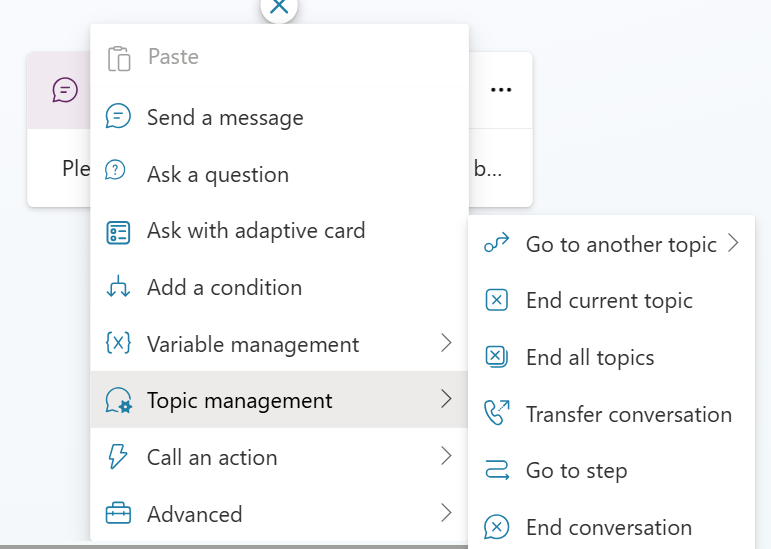
Ending a Topic
- Definition: Closing a specific thread or subject within a broader conversation.
- Use Case: When the user has completed discussing a specific topic but intends to continue the overall interaction.
- Behavior:
- Clears context related to the specific topic, freeing resources for the next topic within the same session.
- Retains the general conversation history and tone.
- Example: A user discussing "order tracking" finishes that discussion and shifts focus to "return policies."
Ending a Conversation
- Definition: Closing the entire interaction session with the user.
- Use Case: When the user or system concludes the interaction completely, signaling the end of the session.
- Behavior:
- Clears all contextual memory of the session.
- Resets the system for a fresh interaction with no residual context.
- Example: After resolving all queries, the user says, "Thank you, that's all for now."
When to Use Each:
- End a Topic: Use this when transitioning between different tasks or topics but keeping the session open for further interaction.
- End a Conversation: Use this when the user indicates they're done or when the system detects that the session should be closed.
Properly handling these actions ensures smoother user experiences and efficient system management.