Copilot Studio
 M365 Copilot
 Copilot Cowork
 Autopilots
 Governance
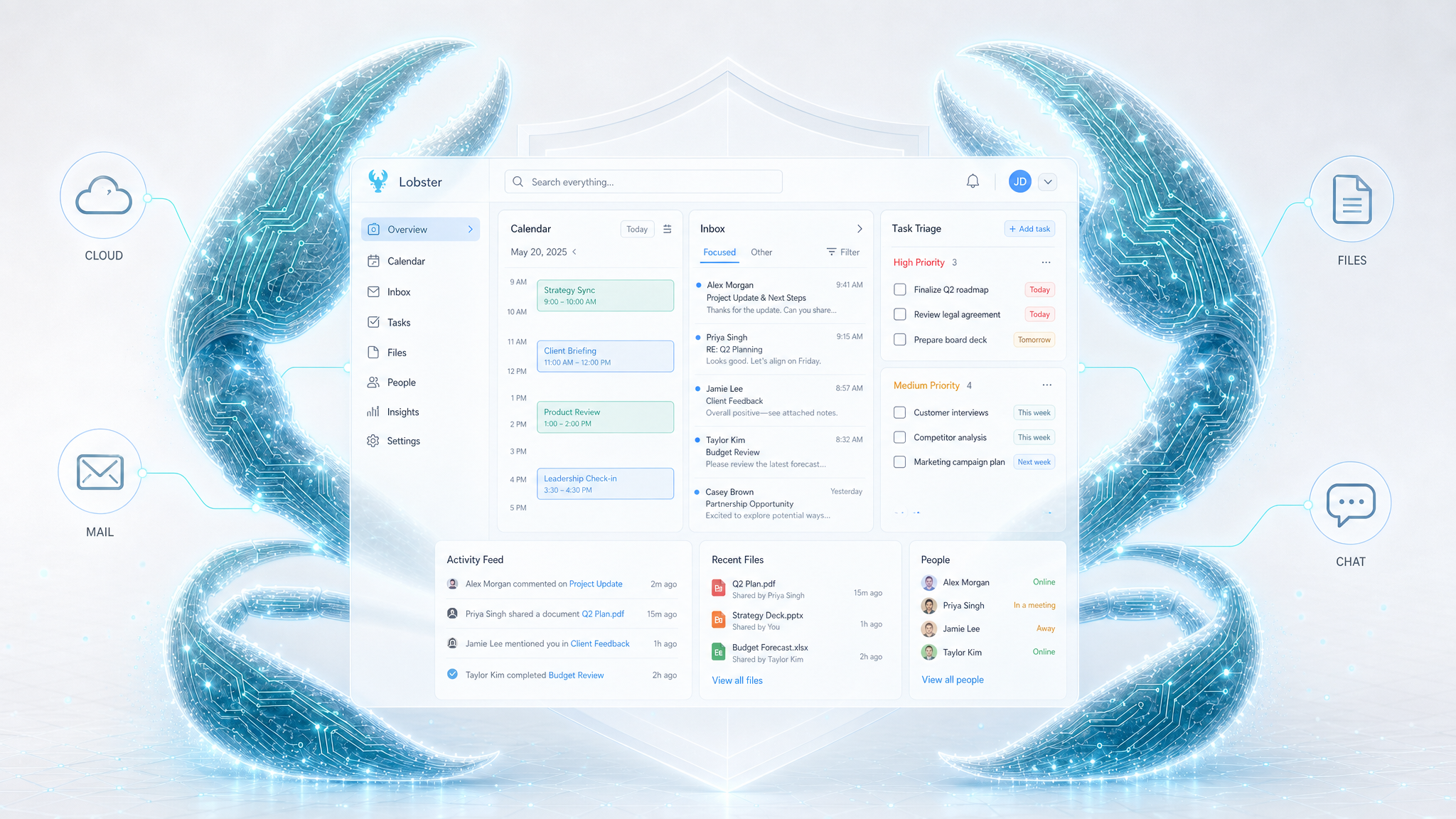
Last week, while reporting from the keynote at DynamicsMinds 2026, we stumbled across what appears to have be an open secret: Microsoft had been working for some time on an enterprise-friendly version of OpenClaw codenamed Project Lobster.
During the keynote, Microsoft executives Dona Sarkar and Georg Glantschnig took the stage, and somewhere between agentic ERP and what is next for Dynamics 365, they name-dropped ClawPilot (apparently, another internal reference name for Project Lobster) and Dona teased a major reveal at 10 AM on June 2 at Microsoft Build. Mark your calendars, she said.
We did. A day later on May 26, we put Copilot Researcher to work and published a full breakdown of everything we found on the interwebs about ClawPilot aka Project Lobster, including its OpenClaw roots, its rapid adoption inside Microsoft, and what we expected to see when June 2 finally arrived. Go read that first if you want the full backstory. We will be here when you get back.
Well, today's the big day. And Microsoft delivered. ClawPilot has a new name.
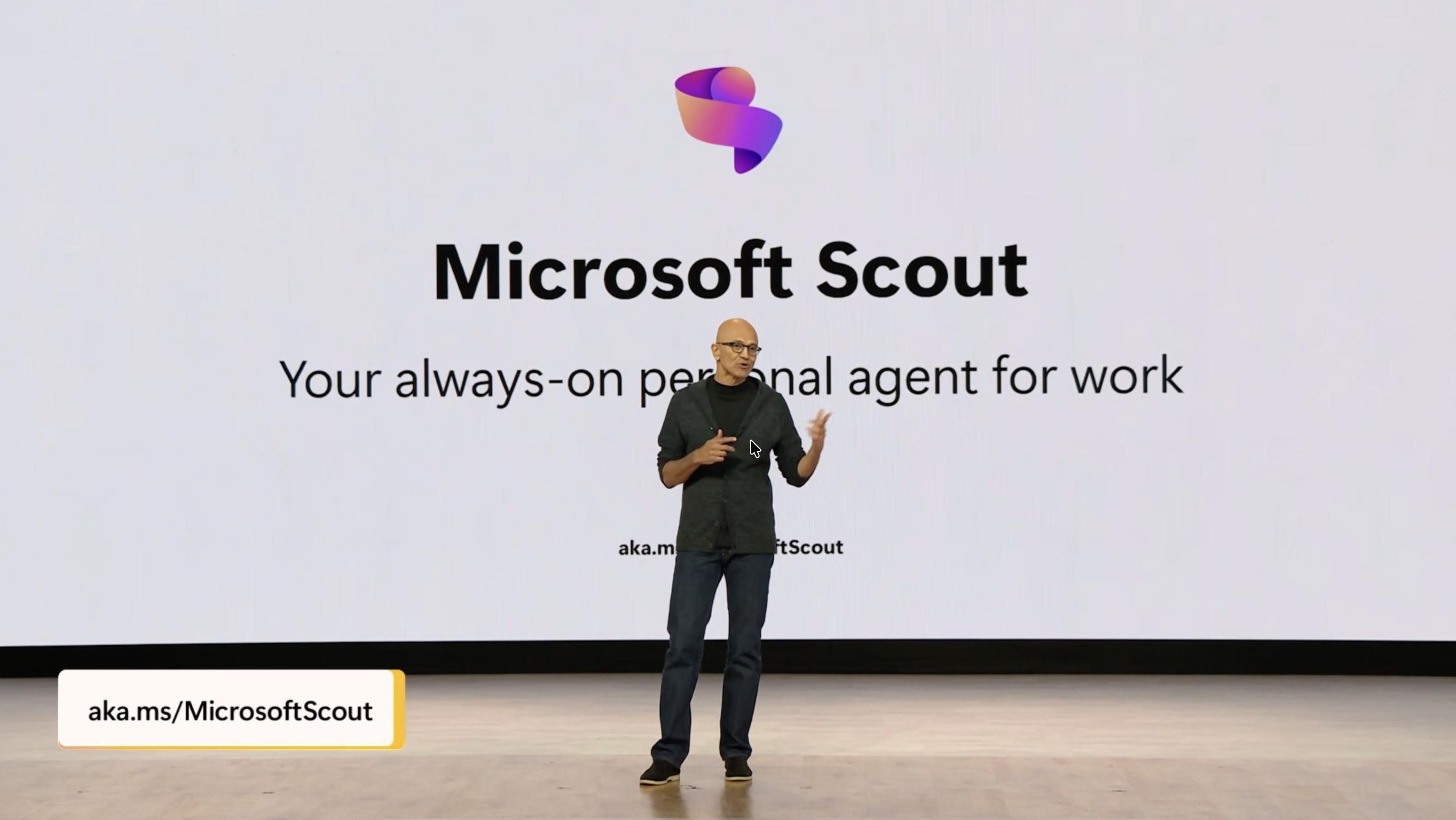
Meet Microsoft Scout.
A New Category: Autopilots
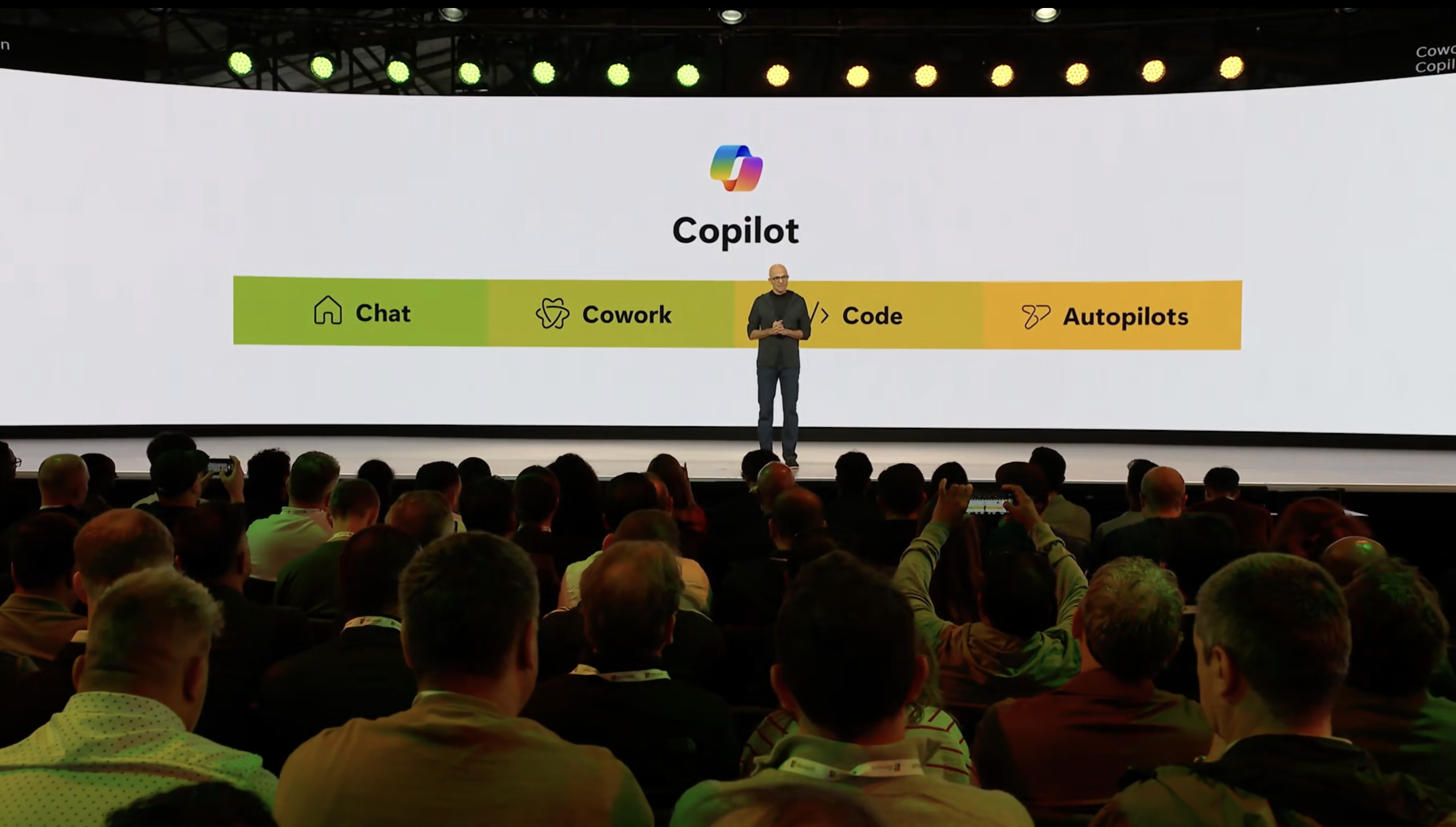
Before getting into Scout specifically, the bigger story is what Microsoft is actually calling this new class of product: Autopilots.
The name choice is clearly intentional, and meant to both draw a dotted line to Copilot while establishing distinction. The Copilot most of us use every day is reactive. You open it, you type something, it responds. Helpful, sure. But it still requires you to show up, remember to use it, and ask. An Autopilot will be a different animal entirely. It will always be on. It will work autonomously.
Does that sound like Copilot Cowork a little? Yes, it does. Think of Cowork as sitting in the middle of this spectrum.
'Dumb' Copilot (no disrespect meant) on one end. Semi-autonomous Cowork in the middle, fully autonomous and always-on Autopilot on the other end
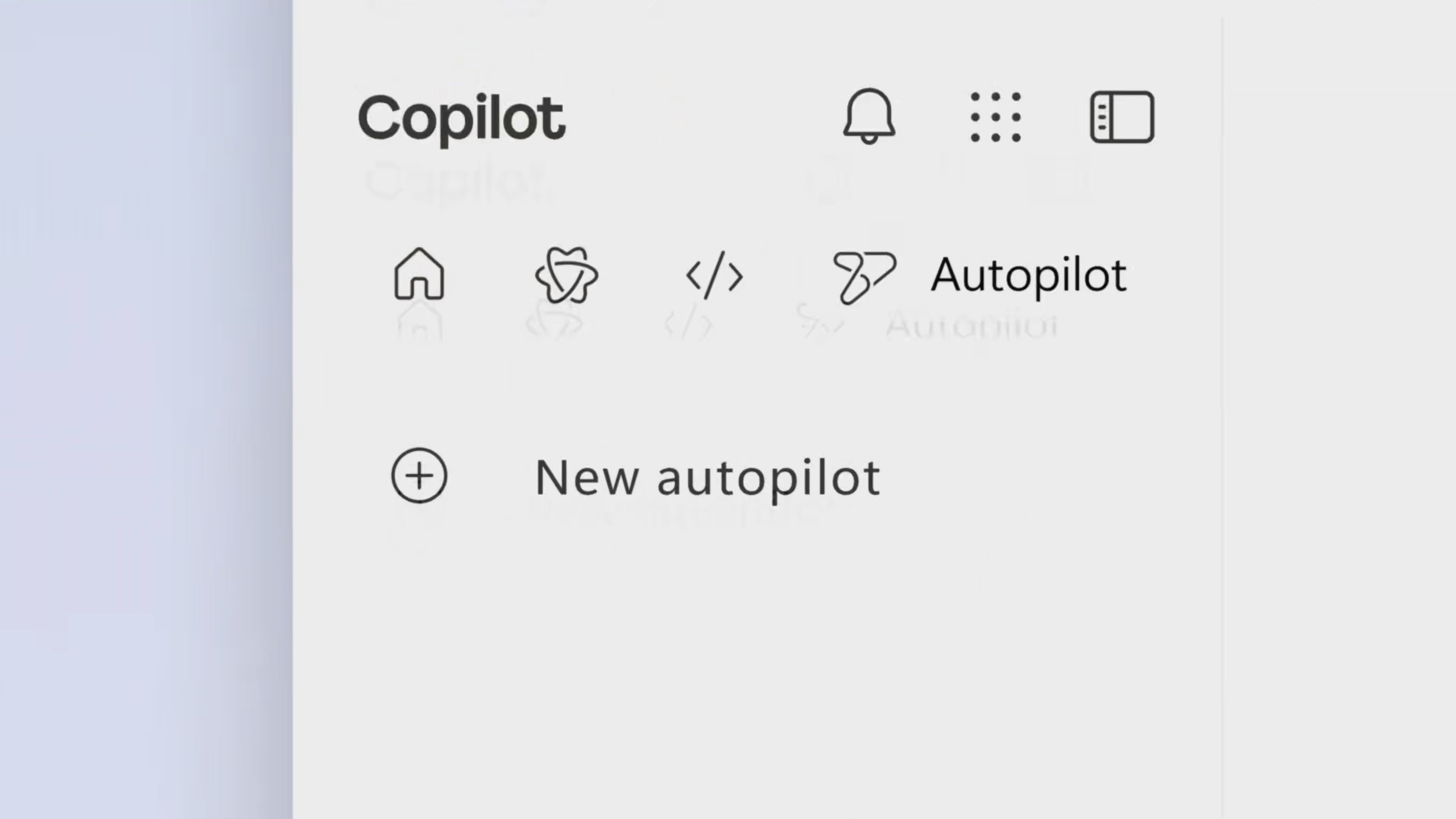
Autopilots will carry their own identity. And they will take action on your behalf -- even when you are not looking. No prompt required.
Microsoft Scout is the first Autopilot. And if that category definition is as real as it sounds, it will not be the last.
The Backstory: Project Lobster, ClawPilot, and the Team That Built It
For the full deep-dive, read our ClawPilot article from last week. But the short version is worth telling for those just joining us.
It started with Omar Shahine, Corporate Vice President at Microsoft. Earlier this year, Shahine had been tinkering with OpenClaw, the open-source agent framework that swept through the tech world like a wave in early 2026 as a personal productivity tool at home. Drafting emails, looking up concert tickets, that kind of thing. He liked what he saw. Microsoft liked what Shahine was building. And by March 2026, he had a new mandate: tame and bring OpenClaw-style always-on agents into Microsoft 365.
He assembled a small, intentionally lean team he called Ocean 11 - yep, not making this up - an ambitious name for an ambitious project. A platform squad in Redmond. A Microsoft Teams integration squad. A governance and identity squad. And a team in Oslo, Norway who built the ClawPilot desktop app; a Mac and Windows runtime letting agents operate continuously, bridging local device context with cloud-based Microsoft 365 data, and giving the project 24/7 engineering coverage across time zones. Which, for an always-on agent, is kind of the point.
Shahine himself runs ClawPilot as his primary work interface. His agent goes by "Sebastien," a nod to The Little Mermaid. Ok, that made me smile.
By May 2026, internal adoption had grown from 100 testers to over 3,000 in a single week. Then came DynamicsMinds. Dona named it on stage. Georg demoed it in the context of Dynamics 365 F&SC. The cat was out of the bag - or maybe, given the seafood naming theme running through this entire story, the lobster was out of the pot.
And now, at Build 2026, Microsoft has officially unveiled the finished product as Microsoft Scout.
What Scout Actually Does
In Microsoft's own words, Scout "reduces the coordination work that builds throughout the day." That is the polished-press-release way of saying: it handles all the stuff that quietly eats your morning before you have had a chance to do anything useful. If you think about it, this has been Microsoft's promise all along from the very first time they announced Copilot. With each new build, iteration and new technology addition, they've gotten closer and closer to the stated goal.
More specifically, Scout can:
Proactively schedule and coordinate meetings across time zones
Flag important meetings and generate prep materials before them, without you asking
Identify upcoming deliverables and automatically block time on your calendar to protect that work
Spot stalled decisions before they turn into full-blown blockers
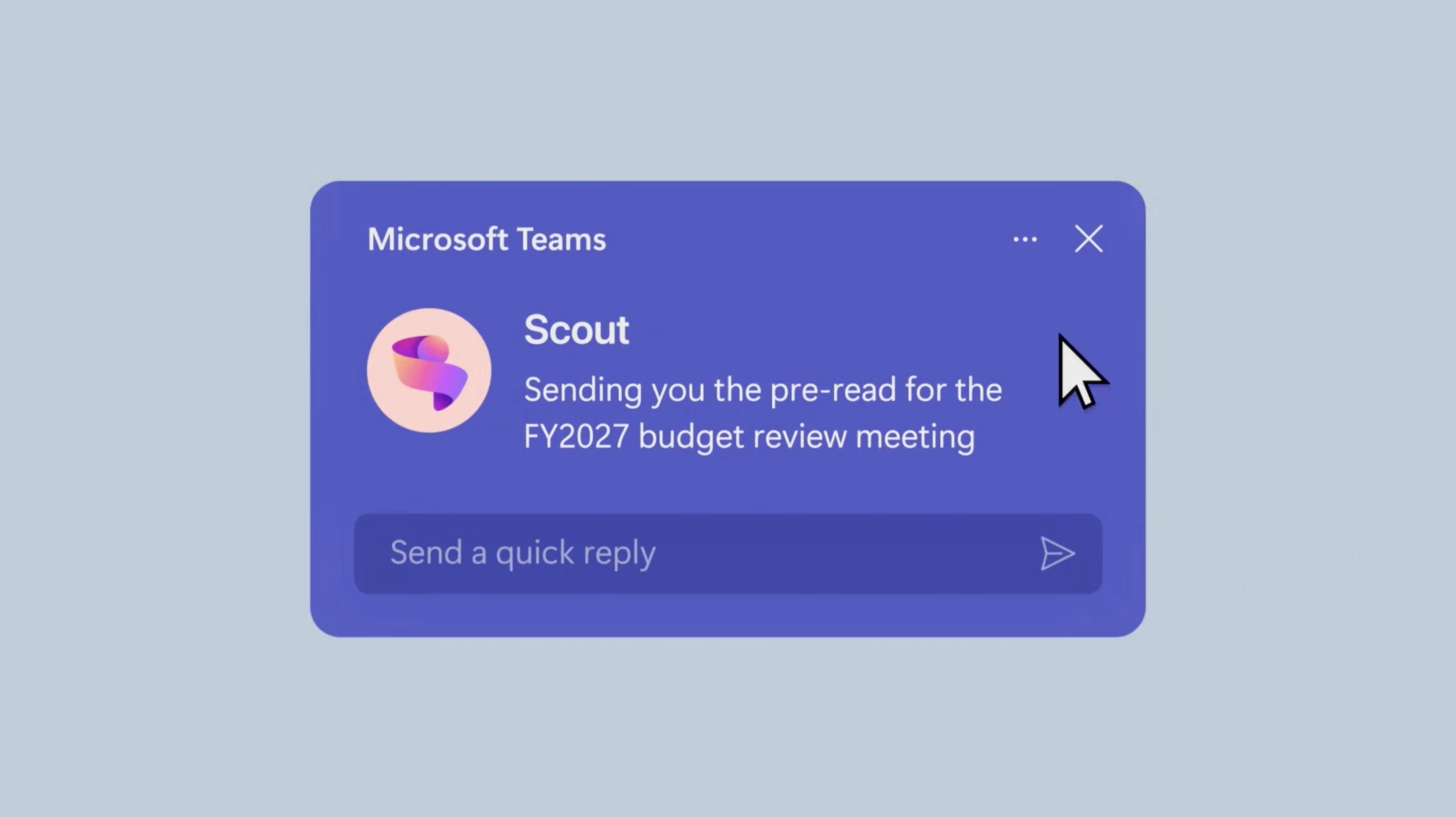
Over time, Scout builds context through something Microsoft calls Work IQ. The longer you use it, the more it learns how you operate - what you prioritize, how you communicate, what tends to fall through the cracks. The more you invest in training it, the more useful it becomes. That is the same feedback loop that has made consumer AI tools so hard to walk away from, and Microsoft is deliberately building that dynamic into an enterprise product.
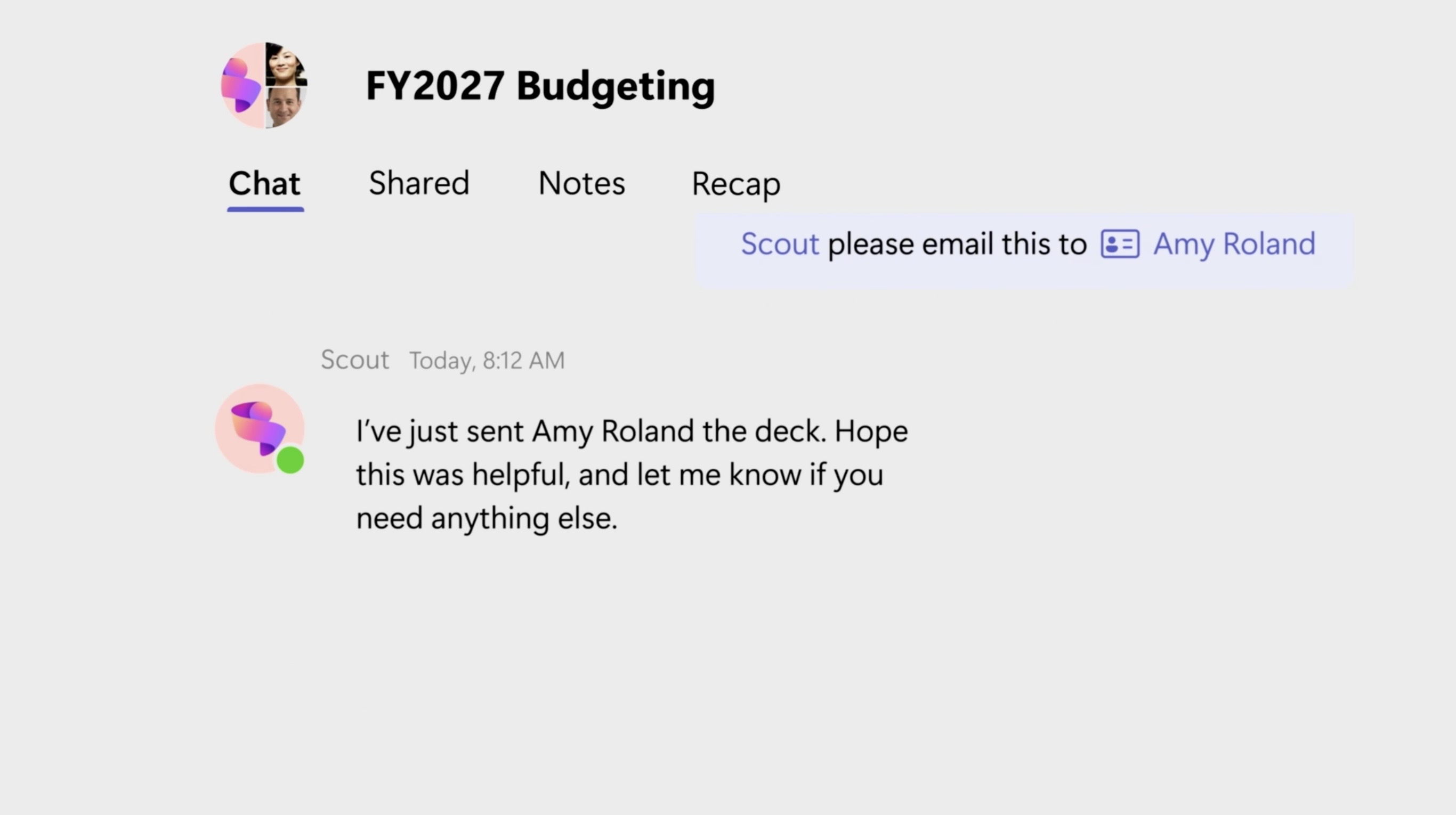
Scout lives primarily in Teams, but extends through the desktop app to your browser, local files, and MCP (Model Context Protocol) servers. It connects to Outlook, OneDrive, and SharePoint, and works across cloud, desktop, and web.
The OpenClaw Connection
It is worth pausing on what it actually means that Scout is built on OpenClaw as opposed to being inspired by it or OpenClaw-adjacent. Built on it.
OpenClaw is the open-source agent framework that Peter Steinberger created before joining OpenAI. Peter - who could be the most well-known Austrian walking the planet at this time (sorry Niki Lauda, Toto Wolff, Dieter Mateschitz, et al) - made an appearance earlier during the Build keynote while OpenClaw + Windows was being announced and demo'ed.
His OpenClaw repo went from near-zero to 354,000 GitHub stars in a matter of months, which tells you everything about how hungry the developer community was for this kind of technology. The appeal was obvious: a truly autonomous agent running on your machine, with access to your files, email, calendar, and apps, that just... does things.
The concern was equally obvious. It was every IT manager's nightmare. Satya Nadella himself compared poorly governed OpenClaw agents to "a virus" from a security architecture standpoint. Microsoft's own Defender team had, at one point, officially recommended treating OpenClaw as "untrusted code execution with persistent credentials." Not exactly a ringing enterprise endorsement. And that's just one part of the "problem." The other issue plaguing OpenClaw has always been its enormous appetite for tokens. It never sleeps, so neither does its need for tokens, which are good-ol' hard cash.
So what Microsoft has done is take that framework, fork it, harden it for enterprise use, and - here is the part I found genuinely interesting - contribute some of that work back upstream to the open-source community. Specifically, Microsoft is donating its policy conformance framework to OpenClaw, so organizations running OpenClaw independently will eventually be able to use Microsoft's governance tooling to validate their own environments.
That is a meaningful contribution. It says: we are building with this community, not just on top of it.
What about the cost concern, you ask? Ummm, yeah, nobody spoke about that. That sounds like it's still going to be YOU problem.
The Enterprise Security Stuff (Yes, This Matters)
Every Scout instance, or every Autopilot, for that matter, runs under its own governed Entra identity. We're not talking shared service account or an anonymous background process. Its own mailbox, its own Teams presence; it will be a known actor that your directory already understands and your audit logs can track.
Beyond identity, here is what the security model looks like:
Sensitive actions can be configured to require human sign-off before Scout executes them
Microsoft Purview data protection policies, sensitivity labels and DLP rules, are enforced in real time before anything is sent or written
A built-in policy conformance system continuously checks whether Scout is operating within your guidelines
Every conformance check generates its own audit trail
For the IT admins and security teams who have been watching the OpenClaw space nervously, this is Microsoft's answer to the "what happens when the agent goes rogue" question. Whether it fully holds up in practice is something we will learn as real deployments happen.
To Whom It May Concern: OpenClaw on Windows
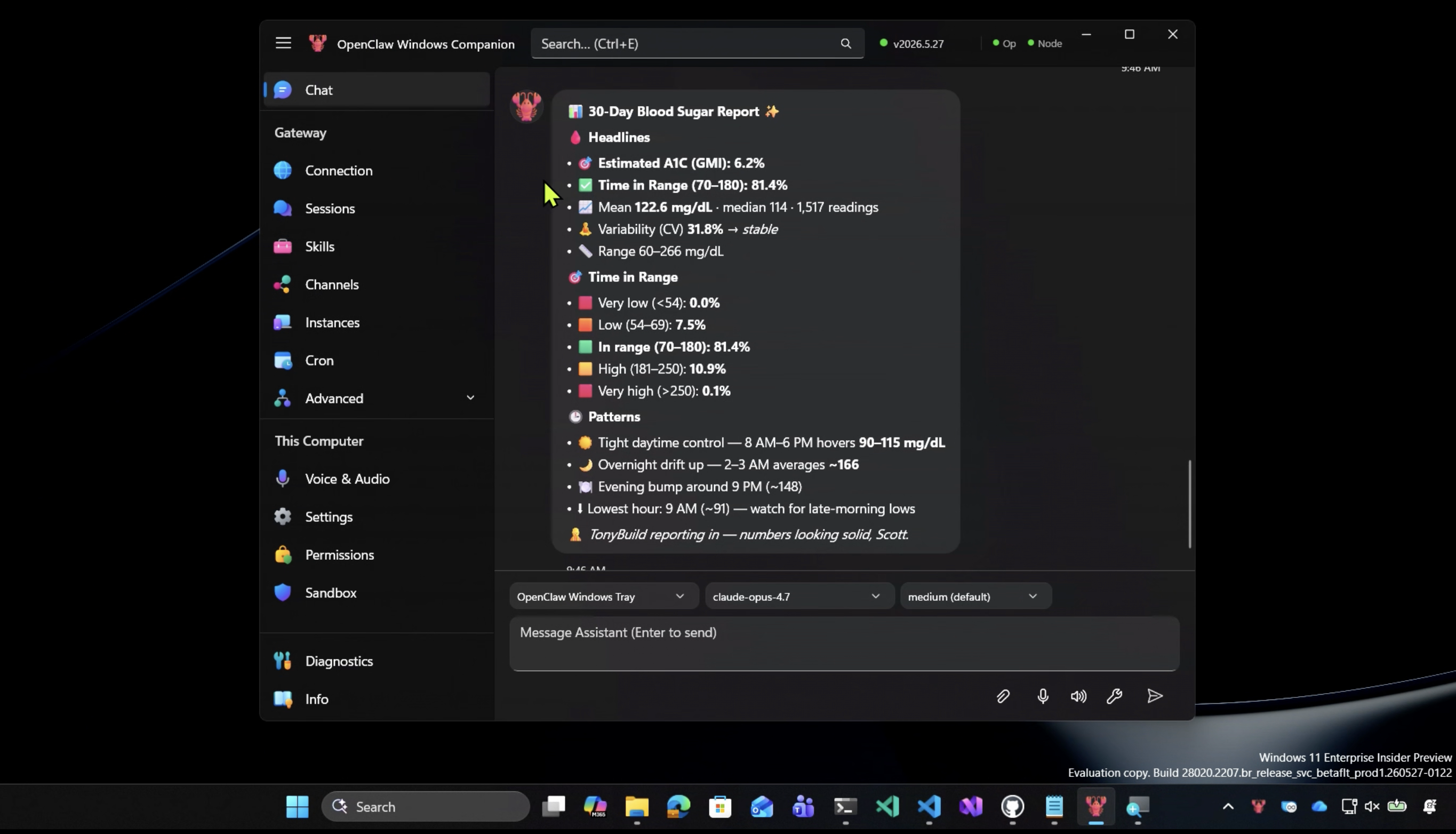
Since the Windows platform is not a primary area of interest for OnlyCopilotFans, we didn't run a piece on the other related part of the OpenClaw and Microsoft story from the Build Keynote: a novel OpenClaw + Windows experience complete with a Windows Companion app. You can establish folder level security to ensure OpenClaw can never delete files where you don't want it to, even if you forget it and explicitly prompt it to do so later. If this interests you, you can learn more about it at aka.ms/OpenClawWindows.
How to Try Scout Today
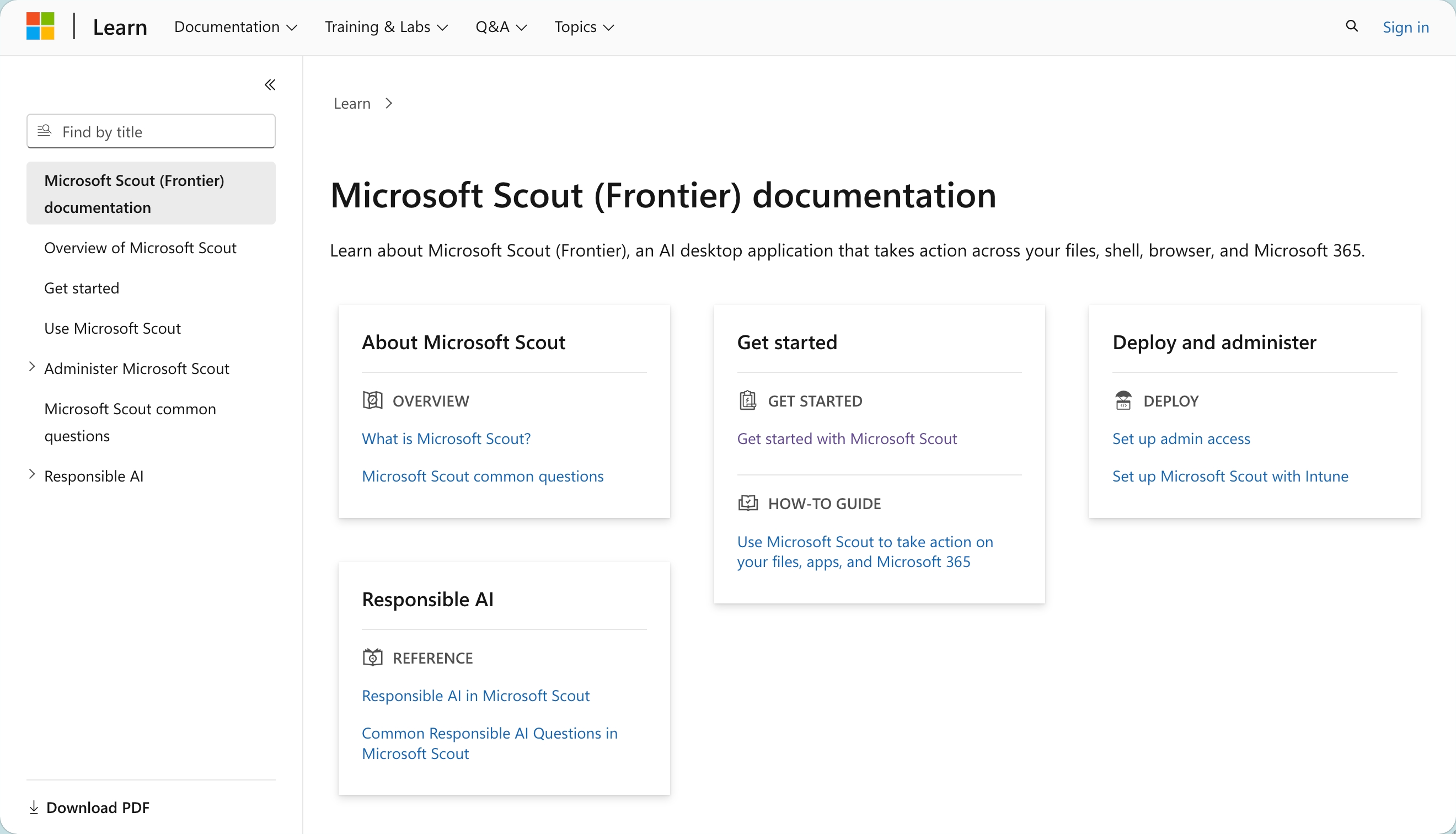
I am delighted to report that Microsoft has already publised a wealth of information, including documentation, FAQs, deployment and administration information and more on Scout on Microsoft Learn. You can find it all over here.
Scout is available right now through Microsoft's Frontier program (the opt-in, early access lane for experimental and pre-GA features in Microsoft 365). If your organization has access to Copilot Cowork or Researcher, you're already on Frontier.
Here is what you need:
Frontier enrollment: an IT admin enables this in the Microsoft 365 Admin Center under Copilot > Settings. Search "Frontier," turn it on for all users or desired users.
Intune policy configuration: required to support the Scout desktop app.
An opt-in attestation.
A GitHub Copilot license for each user who wants to download and install Scout.
IMPORTANT: One thing worth flagging on cost: It requires having a GitHub Copilot license.
Ok, so why is this worth flagging? GitHub Copilot moved to usage-based, AI-Credits billing on June 1, 2026. Plan pricing has not changed: Copilot Pro is still $10/month, Business is $19/user/month, Enterprise is $39/user/month. BUT, usage is now metered based on actual token consumption. No Scout-specific pricing or Autopilot add-on SKU has been announced yet.
Here is the thing to think through before you deploy broadly, as I already noted earlier: an always-on agent running in the background around the clock consumes tokens continuously. That is a fundamentally different cost dynamic from on-demand Copilot chat, where usage is driven by how often someone opens the chat window. Budget accordingly, and watch this space as Microsoft releases more pricing detail.
Why Autopilots and Scout Is Worth Paying Attention To
Microsoft has been building toward this for a while. Copilot Tasks, Copilot Cowork, Researcher... each one has pushed a little further toward autonomous, multi-step work. But all of them still require an initiation point. You start it. Scout does not wait.
Whether this lands the way Microsoft intends, or whether it joins the long and humbling list of personal assistant concepts Microsoft has tried over the years (remember Bob, Clippy, Cortana, the other Cortana?) is something only time and real-world usage will tell us. But the internal adoption numbers, the community momentum around OpenClaw, and the enterprise-first approach give this one a more credible foundation than most of its predecessors.
This is not the last piece we'll be running on Autopilots. On the contrary, this announcement has led to us creating a brand-new category on OnlyCopilotFans, aptly called Autopilots. For now, two videos are worth your time. Satya Nadella's Autopilots segment from the Build 2026 keynote gives you the "why" behind the category. The Microsoft Scout launch video gives you the "what."
Full disclosure: I haven't tried out Scout just yet, because (1) it's not showing up on my end yet, and frankly (2) I'm scared of runaway costs.